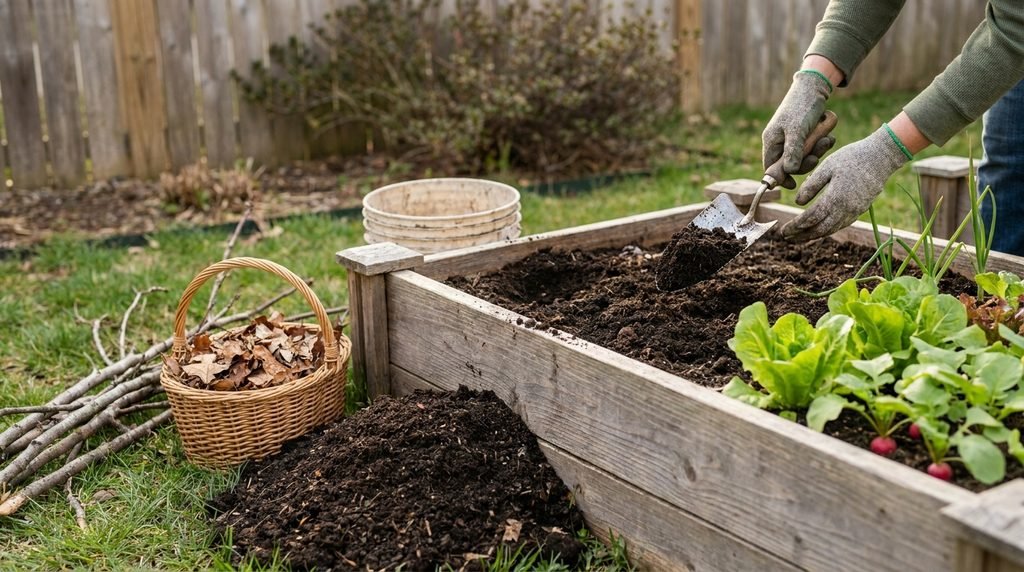
Building a raised garden bed is an exciting first step toward growing fresh vegetables at home. But once the frame is ready, many gardeners discover an unexpected expense: filling it with soil.
A large raised bed can require dozens of bags of growing mix, and those costs add up quickly. Fortunately, you don’t always need to fill the entire bed with expensive bagged soil. With the right materials, a little planning, and an understanding of what your plants need, you can create a productive growing space without overspending.
In this guide, you’ll learn how to fill a raised garden bed cheaply, which materials are worth using, how to calculate the amount of soil you need, and how to avoid common mistakes that can affect your vegetables.
In this article, you’ll discover:
- The most affordable ways to fill a raised garden bed.
- How to use leaves, branches, compost, and existing garden soil.
- How to calculate the amount of soil your bed needs.
- What to put in the bottom of a deep raised bed.
- Which materials to avoid.
- How to choose a budget-friendly filling method for your garden.
What Is the Cheapest Way to Fill a Raised Garden Bed?
The cheapest practical method depends on the depth of your bed, the crops you want to grow, and which materials are available locally.
For a shallow raised bed built directly on healthy ground, improving the existing soil with compost may be the most economical approach.
For a deeper bed, you may be able to reduce the amount of purchased soil by using suitable, untreated organic materials in the lower section and placing good-quality growing soil above them.
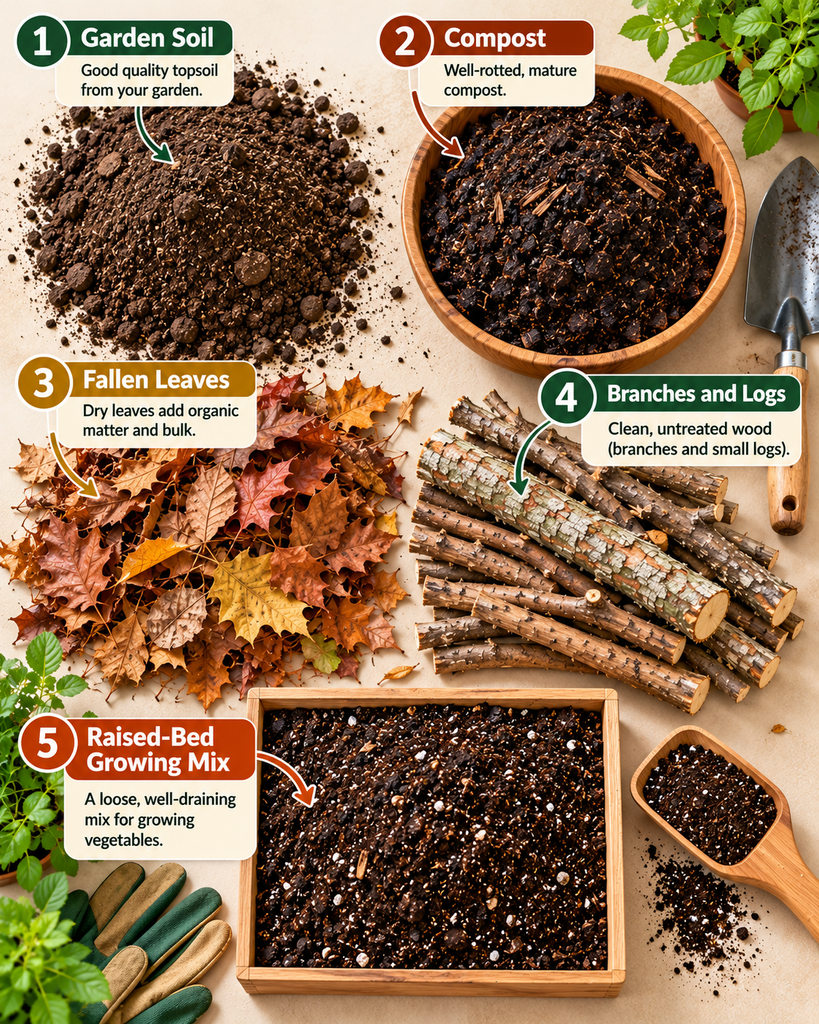
Here are five budget-friendly options to consider.
| Filling method | Best for | Main advantage | Main consideration |
|---|---|---|---|
| Improve existing garden soil | Beds built over usable ground | Reduces the need to buy new soil | Existing soil must be suitable for growing food |
| Use homemade compost | Gardeners with a mature compost pile | Reduces purchased compost needs | Finished compost takes time to produce |
| Add dry leaves and suitable yard materials | Gardeners with access to clean yard waste | Makes use of available organic matter | Materials decompose and settle |
| Use untreated logs and branches | Deep raised beds | Displaces some purchased soil | The bed can sink as wood decomposes |
| Buy soil in bulk | Large garden projects | May cost less per unit than bags | Delivery fees and minimum orders vary |
The most important rule: Don’t save money by compromising the growing environment your vegetables need. The goal is to reduce unnecessary expenses while maintaining suitable soil depth, drainage, and fertility.
1. Calculate How Much Soil You Actually Need
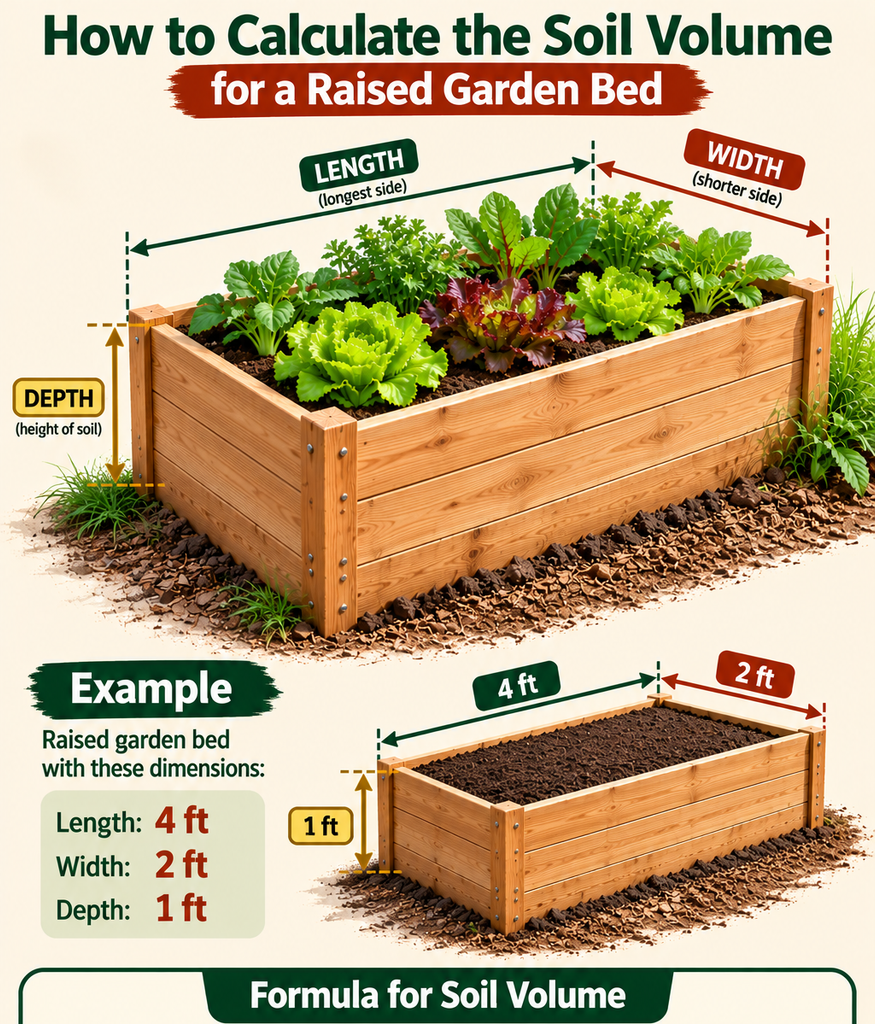
Before buying soil, calculate the volume of your raised bed. This simple step can prevent you from purchasing too much or too little.
For a rectangular raised bed, use this formula:
Length × Width × Filling Depth = Soil Volume
Measure the inside dimensions of your bed and use the same unit for all three measurements.
For example, imagine a raised bed that measures 4 feet long, 2 feet wide, and 1 foot deep.
4 ft × 2 ft × 1 ft = 8 cubic feet.
You would need approximately 8 cubic feet of material to fill it completely to the top.
For a standard 4-by-8-foot bed with a filling depth of 1 foot:
4 ft × 8 ft × 1 ft = 32 cubic feet.
That is a substantial amount of soil, especially if you’re purchasing individual bags.
How many bags of soil do you need?
Bag sizes vary, so check the volume printed on the packaging.
For a 32-cubic-foot bed:
| Bag size | Approximate number of bags |
|---|---|
| 1 cubic foot | 32 |
| 1.5 cubic feet | 22 |
| 2 cubic feet | 16 |
These figures assume the bags contain the stated volume and that you fill the bed to the calculated level. Allow a little extra if you expect settling or need to top up the bed later.
A quick soil-volume calculator
Use this formula to estimate the volume for your own garden:
- Length: ____ feet
- Width: ____ feet
- Filling depth: ____ feet
Multiply the three numbers to calculate cubic feet.
To convert cubic feet into cubic yards, divide the result by 27.
For example:
32 cubic feet ÷ 27 = approximately 1.19 cubic yards.
This estimate helps you compare bagged soil with bulk deliveries before spending money.
Money-saving tip: If you’re ordering bulk soil, measure carefully and ask the supplier how much material the delivery includes. A low price per cubic yard may not be the cheapest option once delivery charges are added.
2. Use the Soil You Already Have
One of the simplest ways to lower your costs is to make use of suitable soil already on your property.
If your raised bed will sit directly on healthy garden ground, you may not need to purchase an entirely new growing medium.
Start by examining the existing soil.
Is it reasonably loose? Does water drain through it? Can plants grow successfully in it? Has it been exposed to chemicals or other potential contaminants?
If the soil is suitable for food gardening, you may be able to loosen it and incorporate mature compost to improve its structure and organic matter.
How to prepare existing soil
- Remove weeds and unwanted vegetation.
- Loosen compacted soil where appropriate.
- Mix in mature, finished compost to improve the growing environment.
- Break up large clumps without pulverizing the soil.
- Check that water can drain properly.
The amount of compost needed will depend on the condition of the existing soil. Avoid assuming that every garden needs the same mixture.
If you’re gardening over a contaminated area, on a paved surface, or in soil that is unsuitable for vegetables, use an appropriate alternative growing medium instead.
Important: Soil from an unknown source, demolition site, or area with a history of contamination should not automatically be used for growing edible crops.
3. Use Homemade Compost to Reduce Costs
Finished compost is valuable in a vegetable garden because it contributes organic matter and can improve soil structure.
If you already maintain a compost pile, using mature compost can reduce the amount of purchased material you need.
Suitable compost ingredients commonly include:
- Fruit and vegetable scraps.
- Dry leaves.
- Untreated plant trimmings.
- Shredded plain cardboard.
- Small amounts of untreated grass clippings.
- Other appropriate compostable garden materials.
The mixture should decompose properly before being used as finished compost.
How to tell whether compost is ready
Mature compost generally has a dark, crumbly appearance and an earthy smell. The original materials should be largely unrecognizable.
Fresh kitchen scraps and a pile of recently collected leaves are not equivalent to finished compost.
Avoid filling your raised bed with a large quantity of undecomposed material. Fresh organic matter can decompose unevenly, settle significantly, and interfere with growing conditions.
Can you fill a raised bed entirely with compost?
Usually, this isn’t the best default approach.
Pure compost can shrink as it decomposes, and its nutrient content, salinity, and physical properties vary by source. Some compost products are not intended to serve as the entire growing medium.
For most beginner vegetable gardens, a suitable raised-bed soil mix amended with mature compost is a more dependable starting point.
4. Use Leaves and Other Organic Materials Wisely
Leaves are one of the most accessible free gardening resources in many American neighborhoods, particularly during autumn.
Rather than sending every leaf to the curb, consider saving suitable leaves for composting or using finished leaf mold to improve your garden soil.
Other potential materials include clean, untreated plant trimmings and suitable garden debris.
However, free material is not automatically suitable material.
Before using organic matter in a raised bed, consider how quickly it will decompose, whether it contains weed seeds, and whether it could introduce pests, diseases, or unwanted chemicals.
How to make the most of fallen leaves
- Collect leaves from an area that hasn’t been exposed to concerning chemical contamination.
- Shred them if practical to help them break down more evenly.
- Compost them or allow them to decompose into leaf mold.
- Incorporate the finished material into the growing medium where appropriate.
Dry leaves can also be used as surface mulch around established plants, helping cover bare soil.
Avoid filling the main root zone with thick layers of undecomposed leaves. They can compact, settle, and create uneven growing conditions.
What about grass clippings?
Grass clippings can be useful in compost when handled appropriately.
Use clippings from lawns that haven’t been treated with herbicides that could harm garden plants. Avoid piling thick, wet layers into the bed, where they may form dense mats.
When the origin of an organic material is uncertain, composting or testing it separately before using it around valuable crops is the safer choice.
5. Use Logs and Branches in Deep Raised Beds
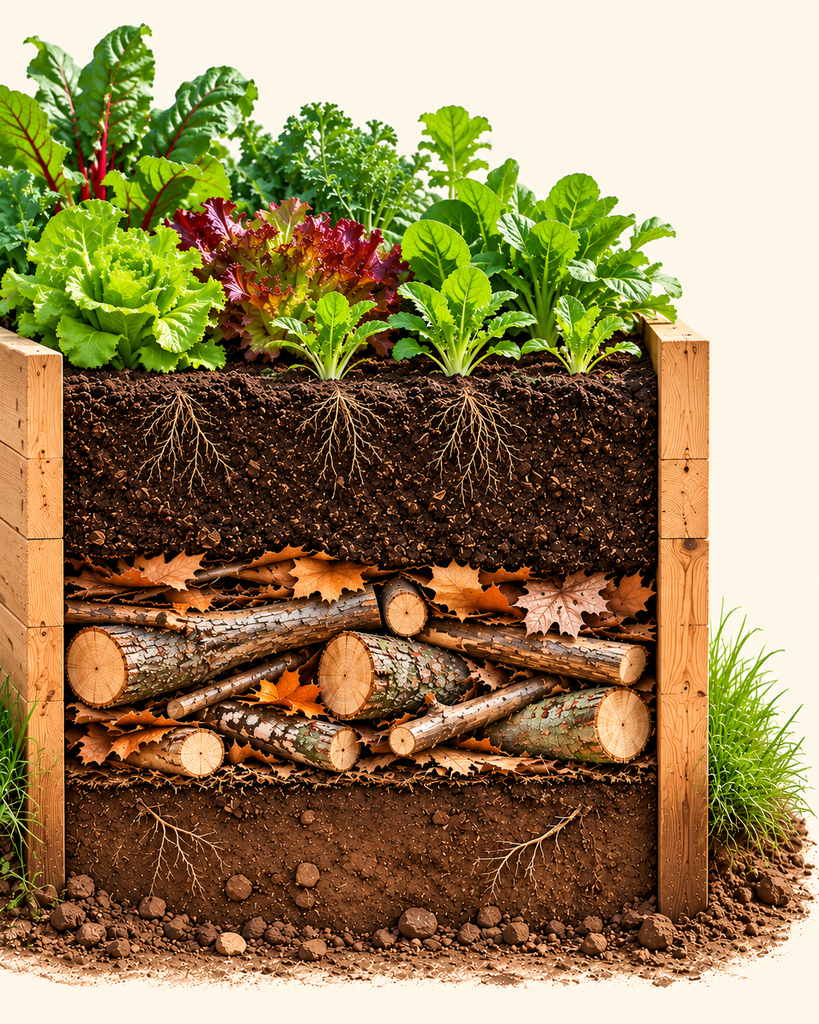
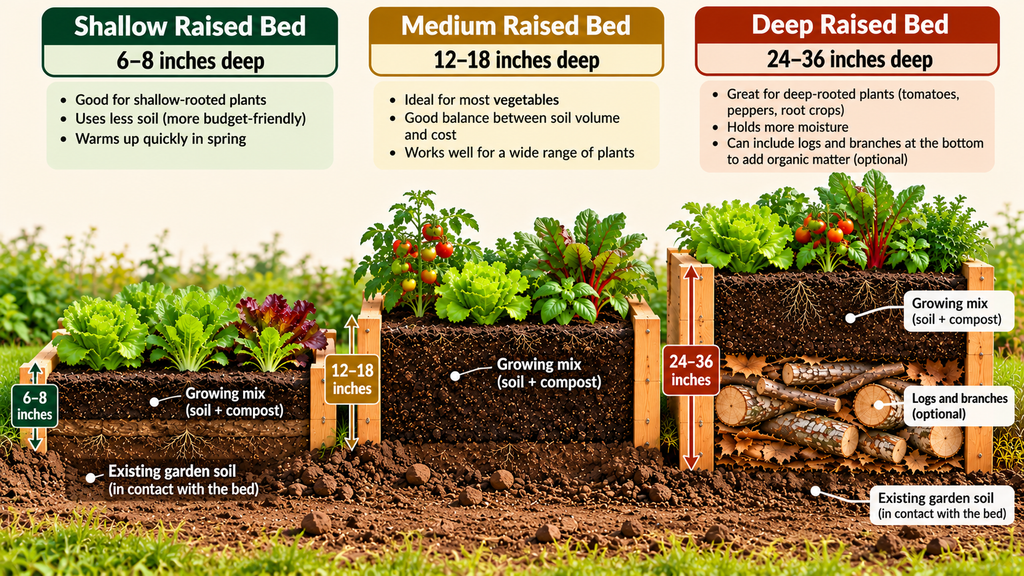
If your raised bed is unusually deep, untreated logs and branches may help reduce the volume of purchased soil required.
This approach is associated with hugelkultur, a gardening technique that uses buried wood and other organic matter as part of a growing system.
As wood decomposes, it can contribute organic matter and influence moisture retention. But it also takes time to break down, and the material above it may settle.
This method is not necessary for every raised bed.
How to fill the bottom of a deep raised bed with wood
Step 1: Confirm that your bed is deep enough.
A bed with limited soil depth may not have enough room for a wood layer while still providing suitable conditions for vegetable roots.
For shallow beds, using a suitable growing medium throughout is generally the simpler choice.
Step 2: Select suitable wood.
Use clean, untreated branches or logs.
Avoid painted, stained, or chemically treated wood, as well as plywood, particleboard, and other manufactured wood products that may contain adhesives or treatments unsuitable for food-growing areas.
Step 3: Arrange the wood loosely.
Place larger pieces at the bottom of the deep bed and smaller branches in the gaps. Avoid creating a tightly packed, impermeable layer.
Step 4: Fill gaps carefully.
Suitable leaves and other clean organic materials may be used to fill some spaces. Water the layers to help settle the material.
Step 5: Add an appropriate growing medium above the wood.
Leave enough depth for the crops you plan to grow. A layer of loose leaves or branches is not a substitute for the soil your plants need.
Step 6: Plan for settling.
Wood decomposes over time, so the soil level may drop. Check the bed periodically and replenish it with suitable growing medium or finished compost as needed.
Is wood suitable for every vegetable garden?
No.
Wood-filled beds are generally more appropriate when the bed is deep enough to accommodate the material without compromising the growing zone.
If you’re growing root crops, using a shallow bed, or building over a paved surface, choose a filling method that provides the required depth of suitable growing medium.
Also consider local conditions, including pests that may be attracted to buried wood.
6. Choose the Right Soil for the Top of Your Bed
Saving money on the lower part of a deep raised bed doesn’t mean the growing layer should be neglected.
Vegetables need a suitable root environment with adequate air, water, nutrients, and drainage.
The appropriate soil depth depends on the crop and what lies beneath the bed.
For a bed built over open ground, roots may be able to grow into the soil below the frame. For a bed placed on concrete, a patio, or another solid surface, the growing medium must provide the necessary root depth within the bed itself.
What should a raised-bed soil mix contain?
A suitable mix generally needs to provide:
- A structure that allows roots to grow.
- Enough water retention for the plants being grown.
- Adequate drainage and air circulation.
- Organic matter and appropriate nutrients.
- A suitable environment for the intended crops.
Commercial raised-bed mixes can be convenient, but their ingredients and quality vary.
If combining soil and compost yourself, consider the properties of each material rather than relying on a single universal recipe. Heavy clay soil, sandy soil, and finished compost behave differently, so the same proportions will not work equally well everywhere.
For reliable local advice, consult your state’s Cooperative Extension service or a university horticulture resource.
Should you put gravel at the bottom for drainage?
For a typical raised bed that drains into the ground, a gravel layer is generally unnecessary.
Adding gravel beneath fine-textured soil doesn’t automatically improve drainage through the bed. Instead, focus on a suitable growing medium and a location where excess water can escape.
If the bed sits on concrete, make sure the design allows drainage without creating a waterlogged container.
7. Buy Soil in Bulk When It Makes Financial Sense
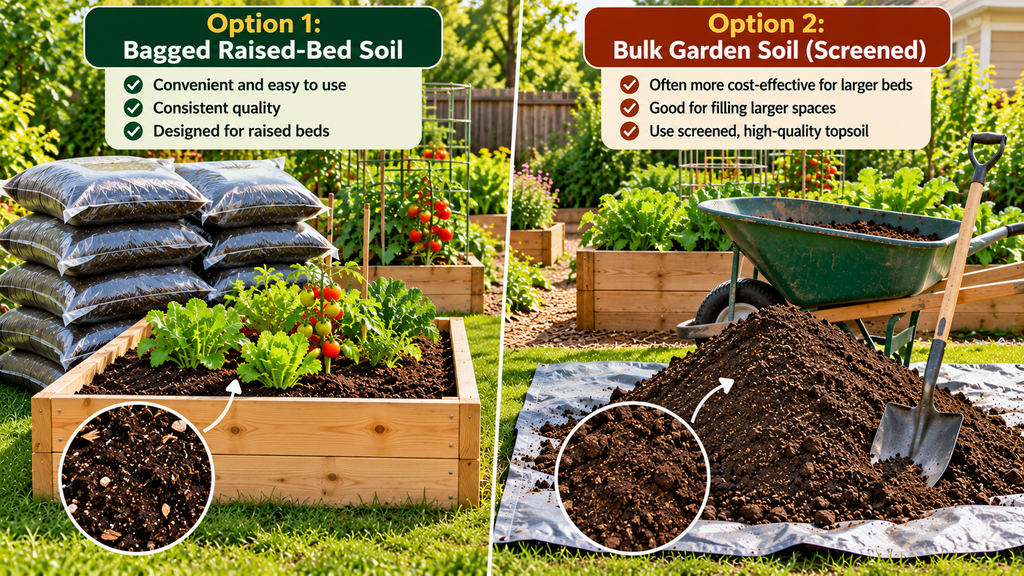
For larger projects, bulk soil can cost less per cubic foot than buying individual bags.
However, the cheapest option depends on your location, the supplier, the quality of the material, and delivery charges.
Before placing an order, compare the total cost rather than the advertised price alone.
Compare these three options
| Option | What to consider |
|---|---|
| Bagged raised-bed mix | Convenient for small beds; check bag volume and price |
| Bulk garden soil | May be economical for larger projects; check quality and delivery |
| A combination of suitable existing soil, compost, and purchased mix | Can reduce purchases when the existing materials are appropriate |
For example, if your garden needs approximately one cubic yard of growing medium, ask local suppliers for the delivered price of that quantity.
Then compare it with the total price of the bags needed to provide the same volume.
Also ask what the product contains. A low-cost fill material isn’t a bargain if it is unsuitable for vegetables or requires expensive amendments.
8. What Should You Never Put in a Raised Garden Bed?
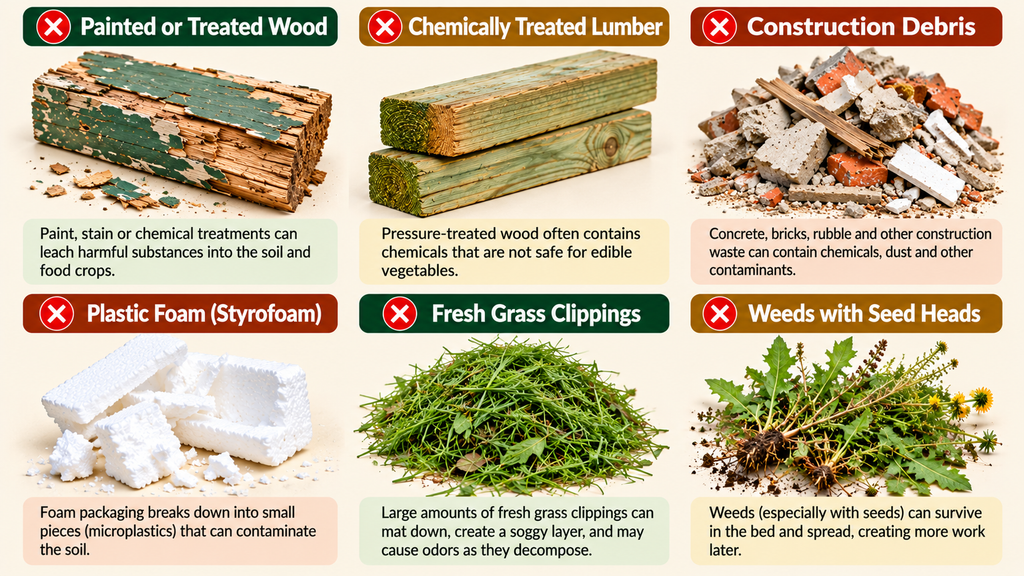
Avoiding unsuitable materials can protect your crops and prevent expensive problems later.
Be cautious with the following:
Chemically treated or painted wood: Don’t use unknown wood scraps or manufactured wood products as filler around edible crops.
Contaminated soil: Soil from industrial sites, demolition areas, or places with a history of contamination may be unsuitable for food gardening.
Fresh manure: Fresh manure can damage plants and introduce food-safety risks. Use properly composted manure from a trustworthy source and follow local food-gardening guidance.
Weed-infested material: Avoid adding invasive weeds, seed-filled weeds, or plant material carrying serious diseases.
Fresh wood chips mixed into the root zone: Large amounts of woody material mixed directly into the growing layer can interfere with nitrogen availability as the material decomposes.
Plastic, foam, and synthetic rubbish: These materials are not substitutes for a suitable growing medium.
Unknown hay, straw, or grass clippings: Some herbicides can persist in plant materials and manure and damage sensitive vegetable crops. If the source is uncertain, don’t use the material around your vegetables.
When in doubt, choose a known, suitable material rather than risking the health of the entire garden.
9. Four Ways to Save Money Based on Your Garden
The best filling strategy depends on your situation. Here are four common examples.
If you have a shallow raised bed
Focus on providing a suitable growing medium throughout the bed.
If the bed sits over healthy garden soil, you may be able to loosen and improve the underlying soil rather than purchasing a completely separate fill.
Avoid sacrificing root depth just to reduce the amount of soil you buy.
If you have a deep raised bed
Consider using suitable untreated logs and branches in the lower section, provided enough growing depth remains above them.
Remember that the bed will settle as organic materials break down.
If you already make compost
Use finished compost to improve the growing medium and reduce the need to purchase additional organic matter.
Don’t assume that fresh scraps or unfinished compost can replace a balanced growing medium.
If you are starting from scratch
Compare the total cost of bagged mix, bulk soil, and appropriate soil-and-compost combinations.
Calculate your required volume before shopping. If the budget is limited, starting with one smaller bed may be more practical than building several large beds you cannot afford to fill properly.
10. Common Mistakes That Make Raised Beds More Expensive
Even gardeners trying to save money can end up spending more than necessary.
Watch out for these mistakes:
Buying soil before measuring the bed. Calculate the volume first so you know what quantity you actually need.
Building a deeper bed than necessary. Greater depth increases the amount of material required. Choose a depth that suits your location, crops, and accessibility needs.
Using unsuitable free materials. Free contaminated soil or herbicide-affected organic matter can create problems that are costly to correct.
Filling a shallow bed with bulky branches. This reduces the space available for the actual root zone.
Ignoring settling. Organic materials shrink as they decompose. Plan to check and replenish the bed.
Buying the cheapest product without checking its contents. Soil quality matters more than the lowest advertised price.
Adding unnecessary layers. Gravel, plastic, or other materials should not be added simply because a gardening video recommends them. Each layer should have a clear purpose.
A good budget garden is not necessarily the garden with the cheapest materials. It is the garden that uses suitable materials efficiently and doesn’t require avoidable repairs.
Frequently Asked Questions
What is the cheapest thing to put in the bottom of a raised garden bed?
For a deep bed, suitable untreated logs and branches can reduce the amount of purchased growing medium required. For a shallow bed, using suitable existing soil and improving it with finished compost may be more practical.
The best option depends on the bed’s depth, the surface beneath it, and the crops you intend to grow.
Can I fill my raised garden bed with just compost?
It is generally better to use a suitable growing medium rather than relying entirely on compost. Compost varies in nutrient content, salt levels, texture, and stability. Excessive amounts can create unsuitable growing conditions.
Use mature compost as an amendment in a mix appropriate for your plants.
Can I use leaves to fill a raised garden bed?
Leaves are useful for composting, mulch, and improving soil after decomposition. However, thick layers of undecomposed leaves can settle and may not provide a stable growing environment.
Use them appropriately and maintain enough suitable growing medium for your crops.
Do I need to put cardboard at the bottom of a raised bed?
Plain, uncoated cardboard can help suppress grass and weeds when a bed is installed over existing ground. Remove tape, labels, and other non-paper materials.
Cardboard is not essential in every situation, and it does not replace the need for appropriate growing medium or drainage.
How deep should soil be in a raised garden bed?
The required depth depends on the vegetables being grown and whether their roots can extend into the ground below the bed.
A shallow bed over usable soil is different from a bed placed on concrete. Research the root-depth needs of your intended crops before deciding how much of the bed can be filled with other materials.
Will a raised garden bed sink after filling?
It can. Soil settles after watering, while leaves, compost, and wood decompose over time.
Check the soil level during the growing season and top up with suitable growing medium when necessary.
Is bagged soil or bulk soil cheaper?
Bulk soil may cost less per unit for a large project, but delivery charges, minimum orders, and material quality affect the final price.
Calculate the volume you need and compare the total delivered cost with the cost of buying bags.
Final Thoughts: Build a Productive Garden Without Overspending
Filling a raised garden bed doesn’t have to consume your entire gardening budget.
Start by calculating the volume you need. Make use of suitable existing soil and finished compost where possible. For deep beds, consider whether appropriate untreated organic materials can reduce the amount of purchased soil without compromising the growing zone.
Most importantly, choose a filling method that matches your garden rather than following a single recipe for every situation.
A carefully planned raised bed can help you grow vegetables, make better use of your outdoor space, and avoid spending money on materials you don’t need.
Ready to plan your next garden project? Start by measuring your raised bed, checking what suitable materials you already have, and making a simple list before buying anything.
Getting ready for colder weather? Read How to Winterize Your Garden: 8 Ways to Protect Plants from Frost to keep your new beds and plants safe through winter.