Introduction
Your Christmas cactus not blooming issue is not obvious from its healthy appearance. The stems are green and plump, and it is growing well, yet December brings only leaves. Sometimes it forms a few buds, then drops them onto the floor.
Here’s the good news: a Christmas cactus not blooming is almost never a sick plant. It is a plant that is not getting the signal to flower. Unlike most houseplants, it needs specific conditions in autumn (long nights, cool temperatures and a bit of neglect) before it will set buds.
In this guide you’ll find the 8 most common reasons your Christmas cactus won’t bloom, how to fix each one, and a simple 6-week plan to get it covered in flowers.
First, check which holiday cactus you have
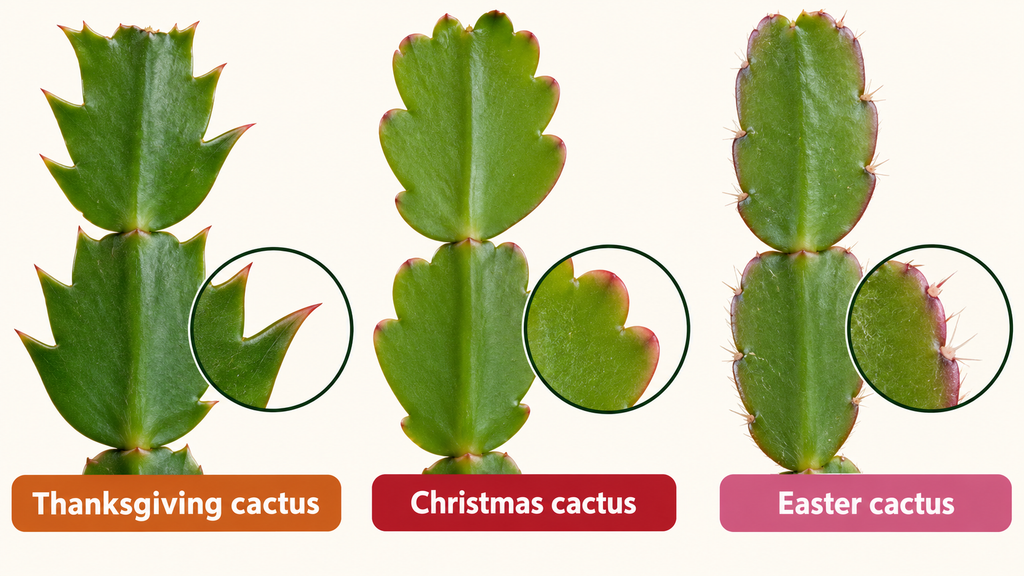
Three similar plants are all sold as “Christmas cactus”, and they bloom at different times:
- Thanksgiving cactus (Schlumbergera truncata): pointed, claw-like teeth on the stem edges. Blooms in November. This is the one most stores sell.
- Christmas cactus (Schlumbergera × buckleyi): rounded, scalloped stem edges. Blooms in December.
- Easter cactus (Hatiora gaertneri): rounded edges with small bristles. Blooms in spring.
If your “Christmas cactus” blooms in November, it isn’t broken; it’s a Thanksgiving cactus doing exactly what it should. The care below works for both.
8 reasons your Christmas cactus not blooming
1. It gets too much light at night
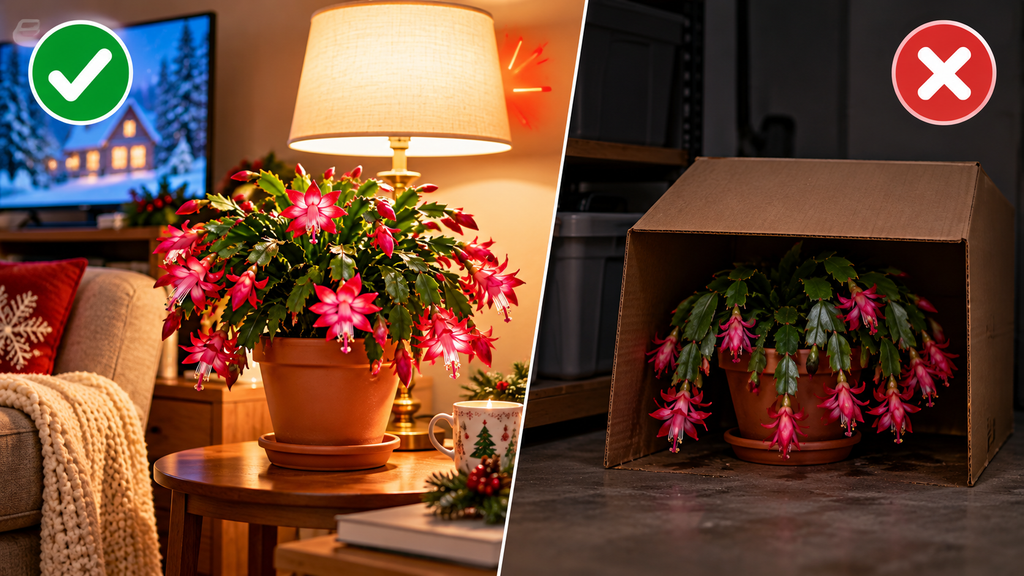
This is the reason most people never suspect. A Christmas cactus decides when to flower by measuring the length of the night. It needs 12 to 14 hours of uninterrupted darkness every night for about 6 weeks to start forming buds.
A living-room lamp, a TV, a porch light or a streetlight through the window can be enough to break that dark period. The plant reads it as “still summer” and keeps growing leaves instead of flowers.
The fix: From late September or early October, move the plant to a room nobody uses in the evening, such as a spare bedroom. Or cover it with a cardboard box or dark cloth from about 6 pm to 8 am. Give it normal bright light during the day.
2. The room is too warm
Cool nights are the second bloom trigger. Buds form best when night temperatures sit between 50 and 60°F (10 to 15°C). In a warm house kept at 70°F (21°C) or more day and night, many plants simply won’t set buds, even with long nights.
The fix: Find the coolest bright spot in your home in autumn: an unheated room, an enclosed porch, or a spot near (not touching) a cool window. Keep it away from frost; below 45°F (7°C) can damage the plant.
3. You’re watering too much
Christmas cactus is a forest cactus. It likes more water than a desert cactus, but it hates sitting in wet soil. Constantly soggy roots start to rot, and a struggling plant puts its energy into survival, not flowers.
The fix: Water only when the top inch (2.5 cm) of soil is dry. Always use a pot with a drainage hole, and empty the saucer after watering. Limp, wrinkled or yellowing stems with wet soil are a sign of overwatering.
4. It never got its autumn rest
In nature, the plant goes through a drier, cooler period before flowering. If you keep watering and feeding it on its summer schedule right through autumn, it never gets the message that it’s time to bloom.
The fix: From early autumn, water less often. Let the top half of the soil dry out between waterings, but don’t let the stems shrivel. This short, gentle rest helps push the plant from growing to flowering.
5. The pot is too big
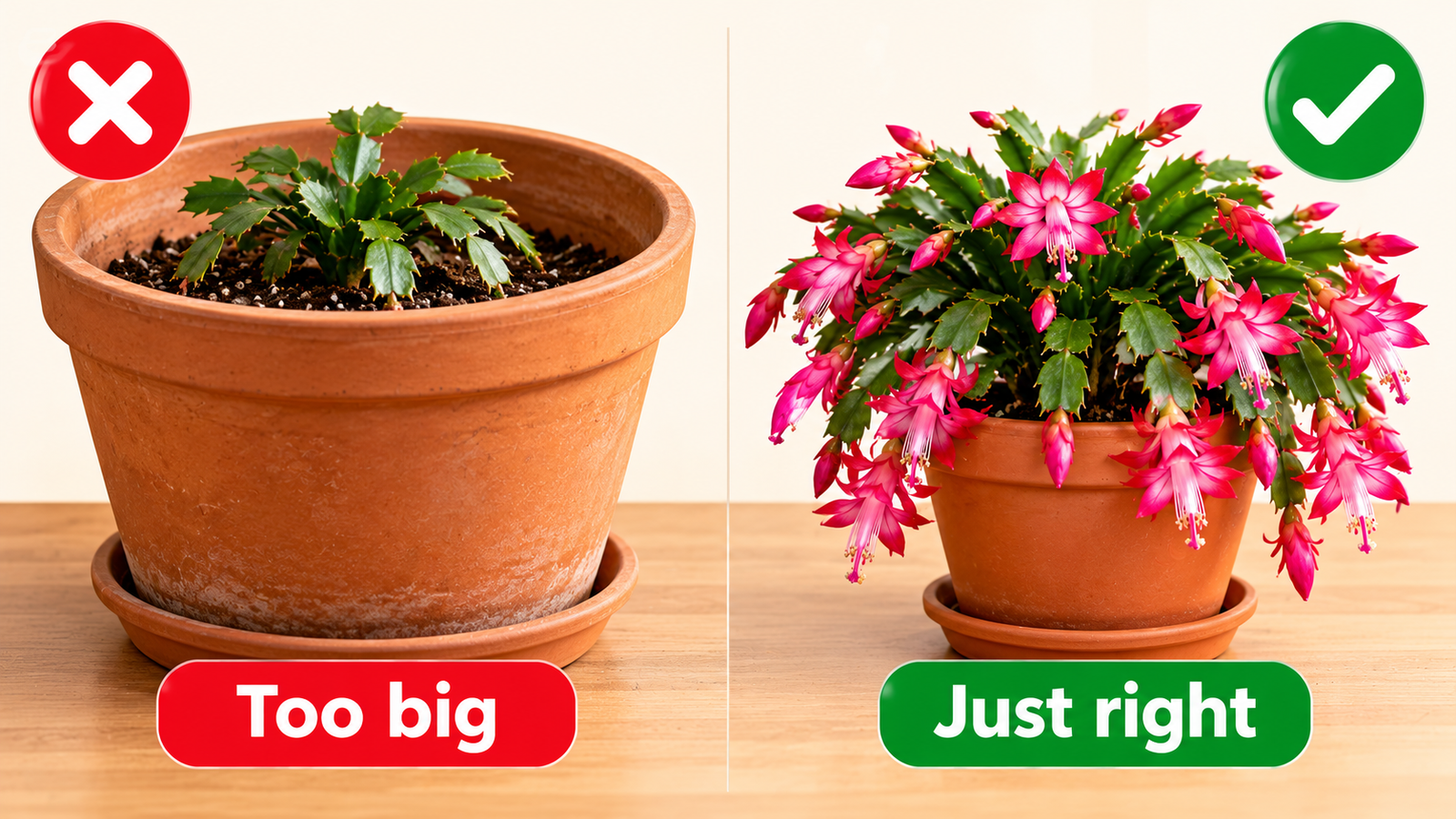
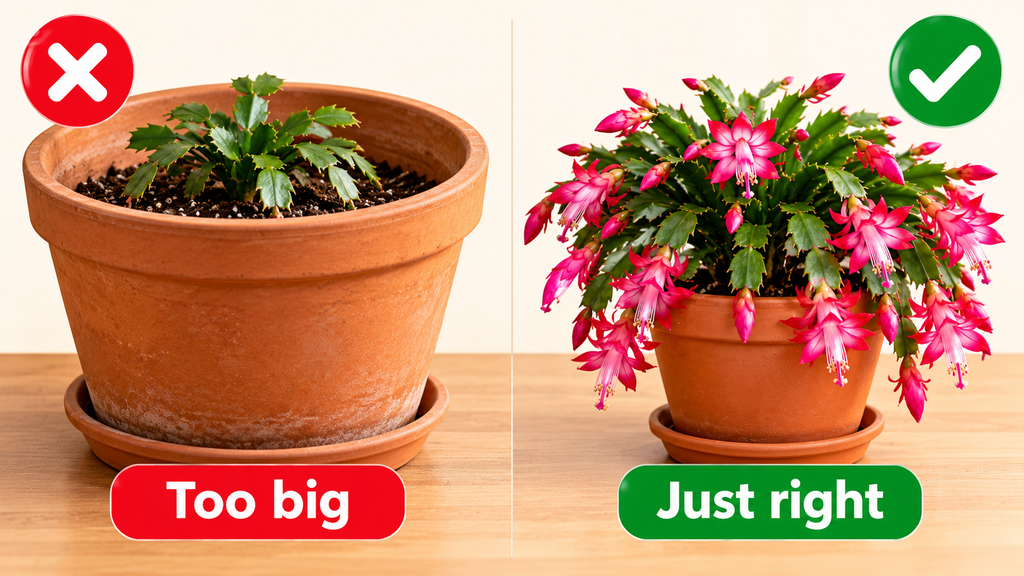
A Christmas cactus blooms best when its roots are a little snug. In an oversized pot it spends its energy filling the space with roots, and the extra soil holds water for too long.
The fix: Only repot every 2 to 3 years, in spring after flowering, and go up just one pot size (about 1 to 2 inches wider). Use a fast-draining mix, such as regular potting soil mixed with perlite or orchid bark.
6. You moved it after the buds formed
You finally got buds, then they all fell off. This is bud drop, and it’s often caused by a sudden change: a new spot, a different light direction, or a temperature swing. The plant can’t adjust that quickly, so it sheds the buds.
The fix: Once you see buds, pick the plant’s display spot and leave it there. Avoid turning the pot. If you need to move it home from a store, expect a few buds to drop and keep conditions stable.
7. You fed it too late in the year
Fertilizer pushes new leaf growth. Feeding into autumn tells the plant to keep growing stems instead of switching to flowers.
The fix: Feed with a balanced houseplant fertilizer at half strength once a month from spring to late summer. Stop feeding completely by early September, then start again in spring.
8. It’s next to a heater or a draft
Hot dry air from a radiator, heating vent or fireplace dries out buds. Cold blasts from an opening door or a leaky window shock them. Either way, the buds dry up or fall off.
The fix: Keep the plant at least 3 feet (1 meter) away from heaters, vents, fireplaces and outside doors. If your home’s air is very dry, set the pot on a tray of pebbles and water (with the pot above the waterline).
The 6-week plan to get your Christmas cactus blooming
Start this plan 6 to 8 weeks before you want flowers. For December blooms, begin in late September or early October. For a Thanksgiving cactus, start in early to mid September.
| When | What to do |
|---|---|
| Before you start (late summer) | Stop fertilizing. Check the pot has drainage and the plant isn’t in an oversized pot. |
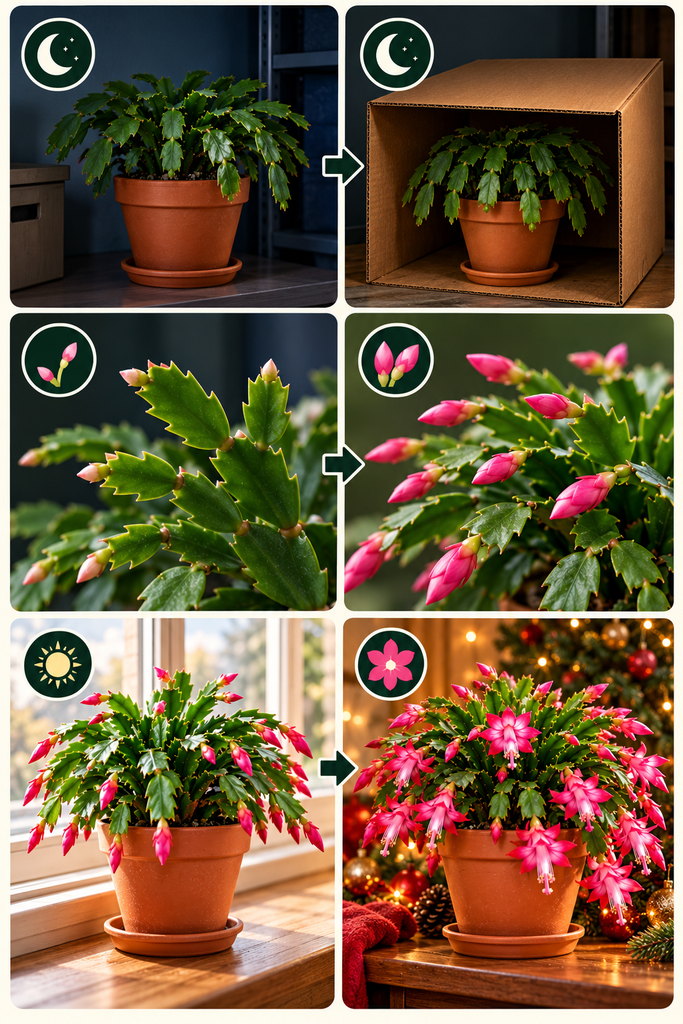
| Weeks 1–2 | Move the plant to a cool spot, 50–60°F (10–15°C) at night. Give it 12–14 hours of total darkness every night (spare room or a box from 6 pm to 8 am). Water only when the top half of the soil is dry. |
| Weeks 3–4 | Keep the same darkness and cool nights every single night; one missed night won’t ruin it, but several in a row will. Keep bright, indirect light during the day. Look for tiny buds at the stem tips. |
| Weeks 5–6 | Once buds are about the size of a pea, you can stop the darkness routine. Move the plant to its display spot now and leave it there. Water a little more often, keeping the soil lightly moist. |
| Flowering (December) | Keep it away from heaters, drafts and direct hot sun. Don’t move or turn the pot. Flowers last several weeks. |
If you can’t give the plant long nights, cool temperatures alone can do much of the work: many growers find that steady nights around 50–55°F (10–13°C) trigger buds even with normal daylight. Combining both gives the most reliable result.
Missed the window this year? If it’s already December and there are no buds, don’t panic. Give the plant normal care through winter and spring, then follow this plan next autumn. You can also start the routine now; you’ll likely get flowers in January or February instead.
Why are the buds falling off?
Bud drop is the most frustrating problem of all, because you were so close. The usual causes are:
- Moving the plant or turning the pot after buds form
- A sudden temperature change, such as a heater switching on or a cold draft
- Letting the soil dry out completely while it’s in bud
- Overwatering, which damages the roots
- Very dry indoor air
Keep conditions steady, keep the soil lightly moist and leave the plant in one place until it finishes flowering.
What to do after it blooms
The care you give after flowering sets up next year’s blooms.
- Let it rest (January to March). Water a little less and keep it in bright, indirect light.
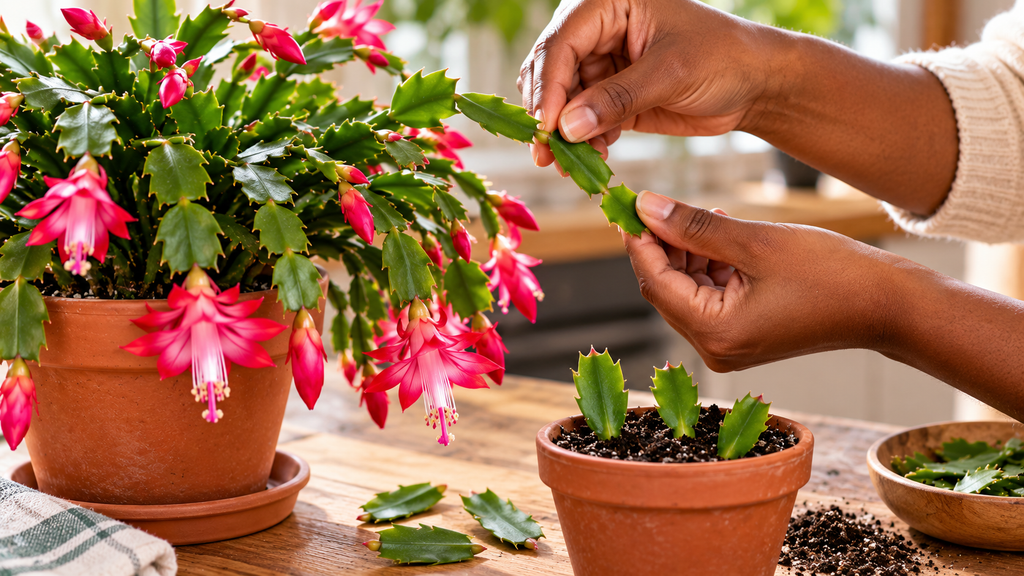
- Prune in spring. Twist off one or two segments from the end of each stem. This makes the plant bushier, and more stem tips mean more flowers next year. The cut segments root easily in moist soil.
- Repot if needed (spring). Only every 2 to 3 years, one pot size up.
- Feed in spring and summer. Half-strength balanced fertilizer once a month, stopping by early September.
- Summer outdoors (optional). It can spend summer outside in light shade, away from direct sun. Bring it in before nights drop below 50°F (10°C).
- Start the 6-week plan again in autumn.
Frequently asked questions
How long does it take a Christmas cactus to bloom? About 6 to 8 weeks from the start of long nights and cool temperatures until the first flowers open.
Can a Christmas cactus bloom twice a year? Yes. A healthy plant sometimes reblooms in spring if it gets cool nights and long darkness again, but the main bloom is in winter.
Should I put my Christmas cactus in direct sun? No. Bright, indirect light is best. Strong direct sun can turn the stems red or purple and scorch them. A little gentle morning sun is fine.
Why are the stems turning red or purple? Usually too much direct sun, cold stress or the plant being too dry. Move it to softer light and check the watering.
How old does a Christmas cactus have to be to bloom? Even small plants grown from cuttings can bloom within a year or two once they have several healthy segments per stem.
Conclusion
A Christmas cactus that won’t bloom is almost always missing one thing: long, dark, cool autumn nights. Fix the light at night, keep the room cool, water less, and leave the plant alone once the buds appear. Follow the 6-week plan this autumn, and you’ll have a plant covered in flowers in time for the holidays.
Protecting your outdoor plants too? Read How to Winterize Your Garden: 8 Ways to Protect Plants from Frost.