Introduction
Every poultry farmer knows the feeling. A few birds look weak, drug prices keep going up, and one disease outbreak can wipe out months of work and money.
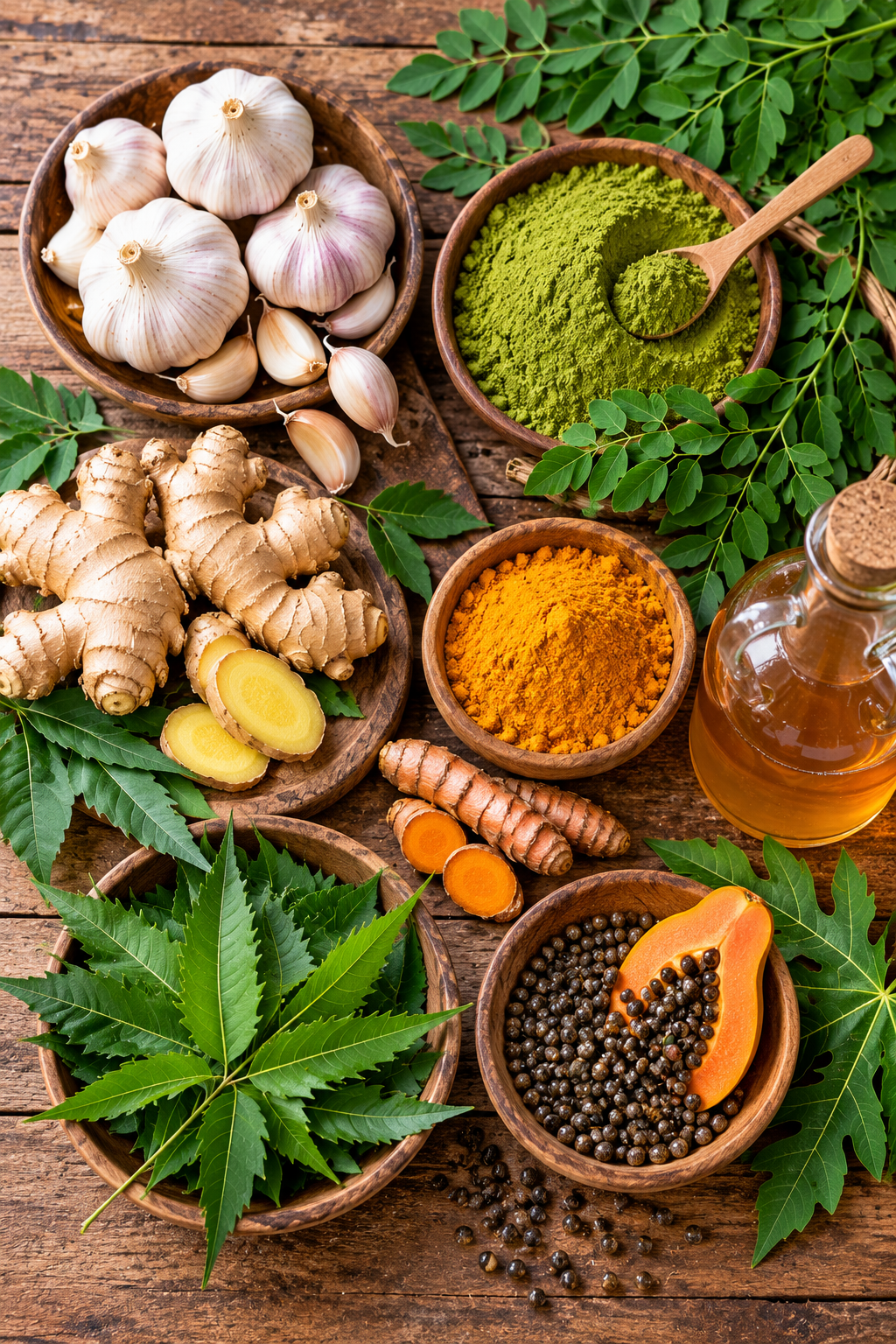
The good news is that many plants and simple products around your compound can help keep your birds stronger, cleaner and less stressed. Farmers across Africa have used garlic, moringa, neem and wood ash for generations, and some of them are now being studied by researchers too.
In this guide you’ll learn 8 natural remedies poultry farmers use, what each one is good for, how much to give, and how to use them safely.
An honest note before you start
Natural remedies are best used to support healthy birds and prevent problems, not to cure serious diseases. Some of these remedies have good research behind them; others are mostly traditional knowledge passed from farmer to farmer.
They do not replace:
- Vaccines against Newcastle disease, Gumboro, fowl pox and Marek’s disease
- Treatment for serious outbreaks like coccidiosis or fowl cholera
- Advice from a vet or livestock extension officer when birds are sick
Think of natural remedies as part of good daily care, alongside clean water, good feed, a clean coop and vaccination. Used that way, they can help you spend less on drugs because fewer birds get sick in the first place.
8 natural remedies for healthy chickens
1. Garlic
Garlic is one of the most popular natural remedies among poultry farmers. It contains allicin, a compound with natural antibacterial properties, and many farmers use it to support immunity during the rainy season and times of stress.
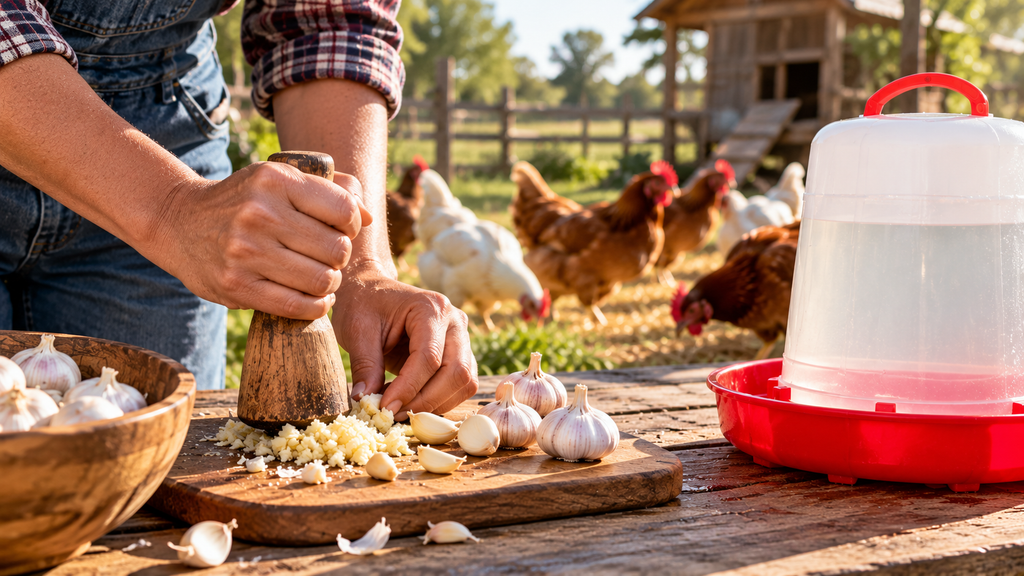
How to use it: Peel and crush 2 to 3 fresh garlic cloves and add them to about 4 litres of drinking water. Let it sit for an hour, then give it to your birds. Use it 2 to 3 days a week rather than every day, and make a fresh batch each time.
Tip: Very strong garlic can give a slight taste to eggs. If your customers notice, reduce the amount.
2. Moringa leaves
Moringa is often called the “miracle tree”, and for poultry it’s mainly a cheap source of protein, vitamins and minerals. Research has shown that moringa leaf meal can replace part of the protein in chicken feed and can support egg yolk colour and growth.
How to use it: Give fresh moringa branches to free-range birds to peck at, or dry the leaves in the shade, grind them into powder and mix into feed. A common amount is 5 percent of the feed, about 50 grams of moringa powder per kilogram of feed. Start lower and increase slowly.
Tip: Don’t go much above 10 percent of the feed. Too much can slow growth because moringa is high in fibre.
3. Ginger
Ginger has natural anti-inflammatory compounds. Farmers traditionally use it during cold, wet weather and when birds are stressed, such as after transport or vaccination.
How to use it: Grate a piece of fresh ginger about the size of your thumb into 4 litres of drinking water, or mix a small amount of dried ginger powder into feed (about 5 to 10 grams per kilogram). Use it for a few days at a time.
4. Apple cider vinegar
A small amount of apple cider vinegar in drinking water makes the water slightly more acidic. Farmers use it to help keep drinkers cleaner and to support digestion.
How to use it: Add 1 tablespoon (15 ml) of raw apple cider vinegar to 4 litres of water, 2 to 3 days a week. Only use plastic drinkers, as vinegar corrodes metal ones.
Tip: If apple cider vinegar is expensive or hard to find in your area, skip it. Clean water, changed every day, matters much more.
5. Wood ash dust bath
This is the remedy most farmers overlook, and it costs nothing. Chickens naturally roll in dust to clean their feathers. Adding wood ash to their dust bath helps them fight mites and lice, which cause stress, feather loss and fewer eggs.
How to use it: Fill a shallow box or old tyre with a mix of about 1 part clean wood ash to 2 or 3 parts dry sand or fine soil. Place it in a dry, covered spot so rain doesn’t turn it to paste. The birds will use it on their own.
Important: Only use ash from plain, untreated wood. Never use ash from painted or treated wood, plastics, rubbish or charcoal briquettes, as they can contain harmful chemicals.
6. Neem leaves
Neem trees grow in many parts of Africa and are well known for repelling insects. For poultry, neem is mainly useful around the birds, to help keep flies, mites and other pests out of the coop.
How to use it: Hang bundles of fresh neem branches inside the chicken house, and mix dried neem leaves into the litter or nesting boxes. Replace them every week or two as they dry out.
Tip: Be careful about feeding neem to your birds. Large amounts can be harmful, so use it mainly in the coop rather than in feed or water.
7. Turmeric
Turmeric contains curcumin, a natural compound that researchers have studied as a feed additive for chickens. Some studies suggest it may support gut health and growth in broilers.
How to use it: Mix turmeric powder into feed at about 5 grams per kilogram (0.5 percent). Adding a small pinch of black pepper helps the body absorb curcumin.
8. Papaya leaves and seeds
Papaya is a traditional farm remedy for worms in many African communities. The seeds contain compounds that may help reduce internal parasites, although the evidence in chickens is still limited.
How to use it: Dry papaya seeds in the sun, grind them and mix a small amount into feed (about 10 grams per kilogram) for 3 to 5 days. Chopped fresh papaya leaves can also be offered to free-range birds.
Important: If you see clear signs of worms, such as worms in droppings, pale combs or weight loss despite eating well, use a proper dewormer recommended by your vet or agro-vet shop. Papaya works best as a regular support, not as an emergency treatment.
Quick reference: how much to use
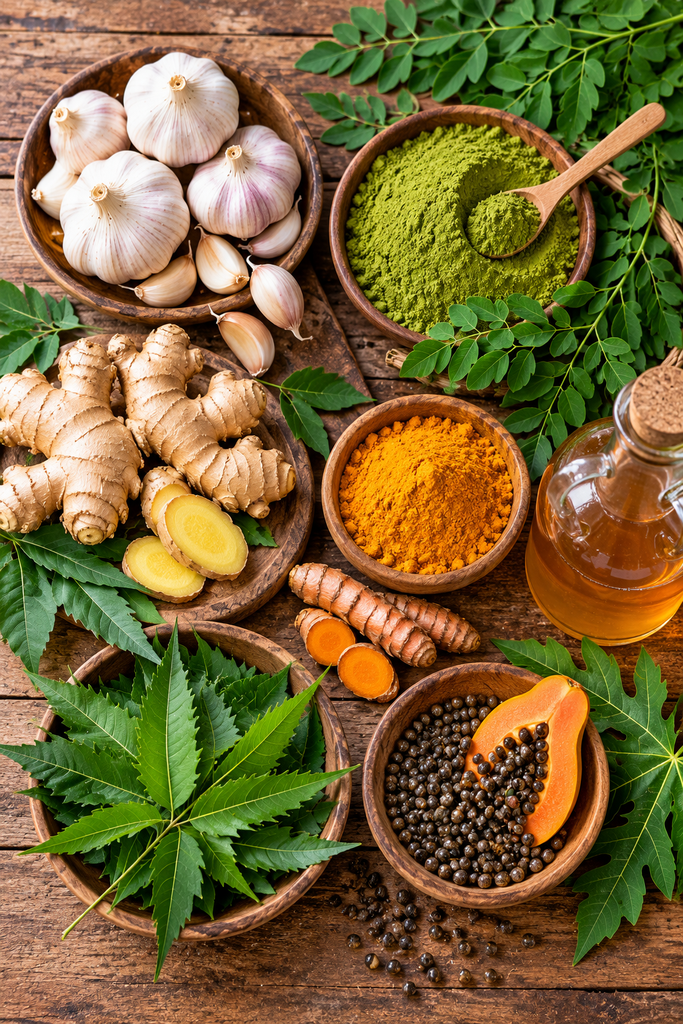
These are amounts commonly used by farmers. Start with less, watch your birds, and ask your local vet or extension officer if you’re unsure.
| Remedy | Main use | How to give it | Amount | How often |
|---|---|---|---|---|
| Garlic | Immune support | Drinking water | 2–3 crushed cloves per 4 L | 2–3 days a week |
| Moringa | Protein and vitamins | Feed or fresh branches | About 50 g powder per kg of feed (5%) | Daily |
| Ginger | Cold and stress season | Water or feed | Thumb-size piece per 4 L, or 5–10 g powder per kg | A few days at a time |
| Apple cider vinegar | Cleaner water, digestion | Drinking water (plastic drinkers only) | 15 ml per 4 L | 2–3 days a week |
| Wood ash | Mites and lice | Dust bath box | 1 part ash to 2–3 parts sand or soil | Always available |
| Neem | Insect repellent | Hung in coop or mixed in litter | A few bundles per house | Replace every 1–2 weeks |
| Turmeric | Gut support | Feed, with a pinch of black pepper | About 5 g per kg of feed | A few days a week |
| Papaya seeds | Traditional worm control | Dried and ground into feed | About 10 g per kg of feed | 3–5 days, once a month |
Safety rules for natural remedies
- Change water every day. Water with garlic, ginger or vinegar spoils faster, especially in the heat.
- Introduce one remedy at a time. That way you can see how your birds react.
- More is not better. Too much of any additive can reduce how much birds eat and drink.
- Keep vaccinating. Natural remedies don’t protect against Newcastle disease or Gumboro. Vaccines do.
- Stop if birds eat or drink less. Go back to plain water and feed for a few days.
- Use clean ingredients. Wash leaves, avoid mouldy plants, and never use ash from treated wood or rubbish.
Image prompt: Clean infographic-style illustration of a poultry drinker and feeder side by side with small icons around them: garlic, ginger, vinegar bottle, moringa leaves, turmeric, papaya seeds, and a measuring spoon. Warm brown and golden palette, flat friendly style, horizontal 16:9, no text.
The real secret: prevention
The cheapest medicine is the one you never need to buy. These daily habits do more to keep birds healthy than any remedy:
- Clean water every day. Wash drinkers often; dirty water spreads disease fast.
- Dry, clean litter. Wet litter breeds coccidiosis and ammonia. Replace wet spots quickly and keep the roof from leaking.
- Good airflow. Chicken houses need ventilation without cold drafts blowing on the birds at night.
- Don’t overcrowd. Too many birds in a small space means more stress, more fighting and faster spread of disease.
- Quarantine new birds. Keep new or returning birds separate for about 2 weeks before mixing them with your flock.
- Limit visitors. Keep a foot bath with disinfectant at the coop door, and don’t let other farmers walk in from their farms.
- Follow a vaccination schedule. Ask your local vet or agro-vet shop for the right schedule for your area and your type of birds.
When to call a vet
Natural remedies are not enough when you see any of these signs. Separate the sick birds from the flock right away and get professional help:
- Several birds die suddenly in a short time
- Twisted necks, paralysis or birds walking in circles (possible Newcastle disease)
- Bloody or very watery droppings (possible coccidiosis)
- Swollen heads, eyes or wattles, or bad-smelling discharge from the nose
- Gasping, rattling breathing or coughing in many birds
- A sudden big drop in eggs or feed intake across the flock
Some poultry diseases spread very quickly and can be reported diseases in your country. Acting fast protects your whole farm and your neighbours’ farms too.
Frequently asked questions
Can natural remedies replace vaccines for chickens? No. Vaccines are the only reliable protection against diseases like Newcastle and Gumboro. Natural remedies support general health but cannot stop these viruses.
Can I give garlic to chickens every day? Most farmers give it 2 to 3 days a week. Daily use isn’t necessary, and strong amounts can affect the taste of eggs.
Is moringa good for layers? Yes. Moringa is rich in protein and vitamins, and research suggests it can support egg production and yolk colour when added in moderate amounts (around 5 percent of feed).
Can I eat eggs from hens given natural remedies? Yes, at the amounts in this guide. Unlike many drugs, these remedies don’t require a waiting period before eating eggs or meat.
What is the best natural dewormer for chickens? Papaya seeds, pumpkin seeds and garlic are traditional options, but the evidence is limited. For a real worm problem, use a proper dewormer from your vet or agro-vet shop and use natural options for regular support.
Conclusion
You don’t need to spend a fortune on drugs to keep your flock strong. Garlic and ginger in water, moringa and turmeric in feed, neem in the coop and a wood-ash dust bath are cheap, simple ways to support healthy birds using what grows around your compound.
Combine them with clean water, dry litter, vaccination and quick action when birds get sick, and you’ll lose fewer birds, spend less on treatment and earn more from every batch.
Save this guide: Share it with another poultry farmer who’s tired of paying for expensive drugs.